
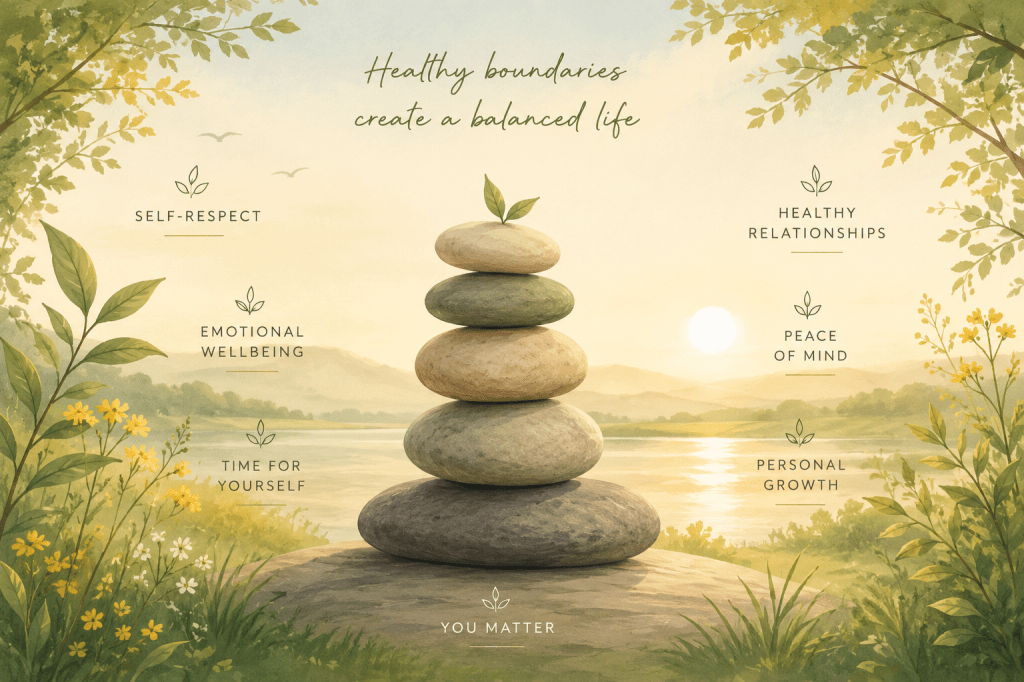
Healthy boundaries are not about keeping people out—they’re about creating relationships where everyone feels respected.
Many people hear the word boundaries and imagine saying “no” all the time or putting up walls between themselves and others.
In reality, healthy boundaries are much gentler than that.
They help us communicate what feels comfortable, what doesn’t, and what we need in order to feel emotionally and physically safe. They allow us to care about others while also caring for ourselves.
For some people, setting boundaries comes naturally. For many others, it can feel uncomfortable, especially if they’ve spent years putting other people’s needs before their own.
The good news is that boundaries are a skill. Like confidence or communication, they can be learned and strengthened over time.
What Are Boundaries?
Think of boundaries as invisible guidelines that help protect your wellbeing.
They influence how you spend your time, how you allow others to treat you, how much emotional energy you give away, and how you look after your own needs.
Healthy boundaries might sound like:
- “I need some time to think about that.”
- “I’m not available this evening.”
- “I’d prefer not to talk about that.”
- “That doesn’t feel right for me.”
- “I need some quiet time today.”
Notice that none of these are aggressive or unkind.
They are simply clear, respectful communication.
Why Do Some People Find Boundaries Difficult?
Many people grow up learning that being kind means always being available.
They may have learned to avoid conflict, keep everyone happy, or put their own needs at the bottom of the list.
Over time this can lead to:
- Feeling overwhelmed
- Feeling emotionally exhausted
- Resentment building beneath the surface
- Anxiety about disappointing people
- Difficulty relaxing
- Losing sight of what they actually want
People often describe feeling as though they’re constantly “running on empty.”
The issue usually isn’t that they care too much—it’s that they rarely leave enough time and energy to care for themselves as well.
Boundaries and the Nervous System
When our boundaries are crossed repeatedly, our nervous system often notices before our conscious mind does.
You might experience:
- A tight feeling in your chest
- A knot in your stomach
- Tense shoulders
- Feeling irritable
- Racing thoughts
- Feeling emotionally drained after seeing certain people
- Difficulty sleeping after stressful interactions
These reactions aren’t signs that something is “wrong” with you. They’re your nervous system gathering information about whether a situation feels safe, manageable, or overwhelming.
Learning to notice these signals can help us recognise when a boundary may need attention.
Different Types of Boundaries
Boundaries aren’t only about saying “no.”
They exist in many areas of life.
Emotional boundaries
Feeling able to have your own thoughts and feelings without taking responsibility for everyone else’s emotions.
Time boundaries
Protecting time for rest, family, hobbies, and recovery instead of always saying yes.
Physical boundaries
Feeling comfortable with personal space, touch, and privacy.
Digital boundaries
Choosing when to reply to messages, limiting screen time, or deciding how much of your life to share online.
Mental boundaries
Respecting different opinions while allowing yourself to think differently.
What Healthy Boundaries Look Like
Healthy boundaries are flexible rather than rigid.
Different relationships naturally have different levels of closeness.
For example, you might happily share personal worries with a close friend while choosing to keep conversations with work colleagues more private.
Neither approach is right or wrong.
The important question is:
“Does this feel comfortable and healthy for me?”
Healthy relationships tend to include:
- Mutual respect
- Listening without judgement
- Accepting differences
- Respecting privacy
- Feeling able to say no without fear
- Repairing misunderstandings through honest conversation
Signs Your Boundaries May Need Some Attention
You might notice:
- Feeling guilty for saying no
- Saying yes when you really mean no
- Feeling responsible for everyone else’s happiness
- Feeling resentful after agreeing to things
- Avoiding difficult conversations
- Feeling emotionally exhausted
- Struggling to ask for help
- Feeling that other people’s needs always come first
Many people recognise several of these, especially during busy or stressful periods.
The encouraging part is that awareness is often the first step towards positive change.
Small Ways to Start Building Healthier Boundaries
Healthy boundaries don’t usually appear overnight.
Small changes often make the biggest difference.
You could try:
- Pausing before agreeing to something.
- Giving yourself permission to think before answering.
- Paying attention to your body’s signals.
- Asking yourself, “What do I need right now?”
- Remembering that disappointing someone occasionally is different from being unkind.
- Practising clear and respectful communication.
Each small step helps build confidence over time.
Boundaries in Therapy
One of the things we often explore in counselling is the relationship between boundaries and emotional wellbeing.
Together we might look at:
- Why saying no feels difficult.
- Patterns that developed earlier in life.
- Anxiety around conflict or rejection.
- People-pleasing habits.
- Building self-confidence.
- Learning to communicate needs calmly and clearly.
- Developing self-compassion alongside healthier boundaries.
Therapy isn’t about changing who you are.
It’s about helping you understand yourself more fully and developing ways of relating to others that leave you feeling respected, valued, and emotionally balanced.
Final Thoughts
Healthy boundaries are an act of self-respect.
They create space for healthier relationships, greater emotional wellbeing, and a life that feels more balanced.
They don’t require perfection.
They begin with noticing your own needs, listening to what your mind and body are telling you, and taking one small step towards honouring them.
Every conversation, every pause, and every respectful choice helps strengthen this skill.
Over time, those small moments can make a meaningful difference to your confidence, your relationships, and your overall wellbeing.

Leave a Reply