
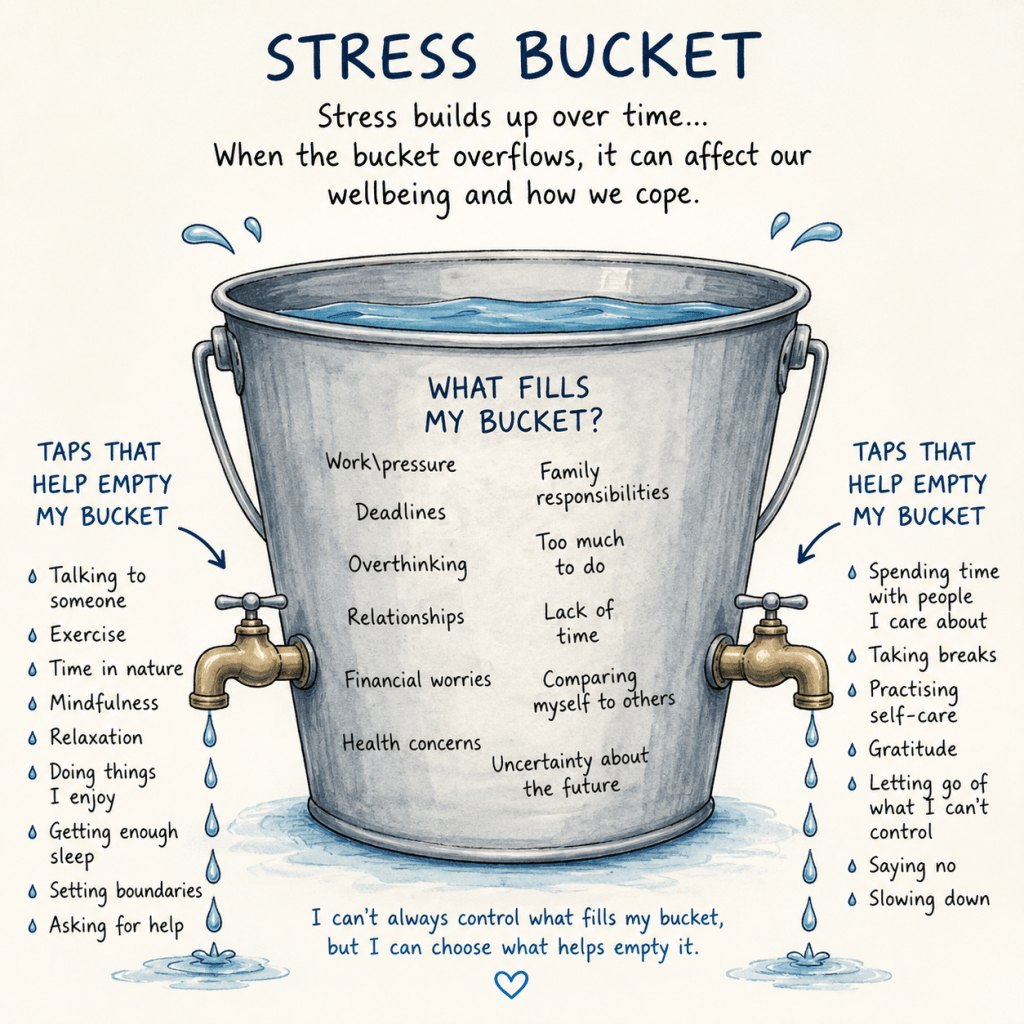
A simple way to understand why stress builds up and what helps us feel more balanced
Most of us experience stress at some point in our lives. Sometimes it arrives following a major life event, such as a relationship breakdown, bereavement, health concern, or financial difficulty. At other times, stress can build gradually through the accumulation of everyday pressures until we begin to feel overwhelmed, exhausted, or unable to cope.
One of the simplest and most effective ways of understanding stress is through the Stress Bucket Model.
The Stress Bucket is a visual tool that helps us understand how stress accumulates and why some periods of life feel more manageable than others. It also helps us identify practical steps that can support our wellbeing.
What Is the Stress Bucket?
Imagine that you have a bucket inside you.
Every challenge, responsibility, worry, pressure, and difficult emotion adds water to that bucket.
Some common examples include:
- Work pressures and deadlines
- Financial concerns
- Family responsibilities
- Caring for others
- Relationship difficulties
- Health worries
- Lack of sleep
- Major life changes
- Feeling lonely or unsupported
- Constantly feeling busy
Each of these experiences adds a little more water.
Some stressors may only add a few drops, while others may feel like someone has turned on a tap.
Over time, if enough stress accumulates, the bucket begins to fill.
What Happens When the Bucket Overflows?
When our stress bucket becomes too full, it can begin to overflow.
This is often when people start to notice symptoms such as:
Physical Symptoms
- Tension and muscle aches
- Headaches
- Fatigue
- Digestive difficulties
- Poor sleep
- Changes in appetite
Emotional Symptoms
- Anxiety
- Irritability
- Frustration
- Feeling tearful
- Feeling overwhelmed
- Low mood
Cognitive Symptoms
- Racing thoughts
- Overthinking
- Difficulty concentrating
- Forgetfulness
- Difficulty making decisions
Behavioural Symptoms
- Withdrawing from others
- Avoiding tasks
- Procrastination
- Snapping at loved ones
- Increased alcohol consumption
- Comfort eating
Many people blame themselves when they begin to experience these symptoms. In reality, these responses are often signs that the bucket has become too full rather than signs that there is something wrong with them.
The Importance of the Taps
The good news is that the Stress Bucket model includes something important: taps.
The taps represent the activities, habits, resources, and support systems that allow stress to drain away.
Examples might include:
- Talking to supportive friends or family
- Counselling
- Exercise
- Walking in nature
- Relaxation techniques
- Mindfulness
- Creative hobbies
- Healthy boundaries
- Rest and recovery
- Problem-solving practical difficulties
When our taps are working well, stress can flow out at a similar rate to the stress flowing in.
When life becomes busy, however, these helpful activities are often the first things to disappear.
Many people stop exercising, socialising, relaxing, or making time for themselves precisely when they need these things most.
Why Do Some People’s Buckets Fill Faster?
Not all buckets are the same.
Some people appear able to manage large amounts of stress, while others feel overwhelmed more quickly. There are many reasons for this.
Factors that may influence how quickly a bucket fills include:
Personality and Thinking Styles
People who are highly conscientious, perfectionistic, or prone to worry often place additional pressure on themselves.
People-Pleasing
Those who find it difficult to say no may take on more responsibilities than they can comfortably manage.
ADHD
Many people with ADHD experience additional stress due to difficulties with organisation, planning, emotional regulation, and managing multiple demands.
Past Experiences
Previous experiences of trauma, adversity, or prolonged stress can leave the nervous system more sensitive to future stressors.
Ongoing Life Circumstances
Caring responsibilities, financial pressures, chronic health conditions, and demanding work environments can all contribute to a fuller bucket.
Understanding these factors can help us approach ourselves with greater compassion.
What Can Help Empty the Bucket?
Although we cannot always remove the stressors in our lives, we can often strengthen the taps.
Some helpful questions to consider are:
- What is currently filling my bucket?
- Which stressors can I influence?
- Which stressors are outside my control?
- What activities help me feel calmer and more balanced?
- When was the last time I made space for myself?
- What support is available to me?
Often, small changes repeated consistently can make a significant difference over time.
A ten-minute walk, setting one healthy boundary, asking for support, or making time for rest may seem small, yet each can help release some of the pressure.
How Counselling Can Help
Counselling provides a space to step back and explore what is filling your bucket.
Together we can identify sources of stress, recognise patterns that may be contributing to overwhelm, develop healthier coping strategies, and explore practical changes that support wellbeing.
Many people find that simply understanding their stress more clearly helps them feel less overwhelmed and more in control.
Counselling cannot remove every challenge life presents, yet it can help you develop the tools, resilience, and self-awareness needed to navigate those challenges more effectively.
A Simple Reflection
Take a moment to ask yourself:
What is filling my bucket right now?
What helps empty my bucket?
What is one small step I could take this week to create a little more space?
Stress is often a sign that you have been carrying a lot for a long time.
You do not need to empty the whole bucket at once.
Sometimes the most powerful change begins with creating a little more room to breathe.
If you are struggling with stress, anxiety, overwhelm, or burnout, I offer counselling and hypnotherapy in Wisbech and online. Feel free to get in touch to discuss how I may be able to help.

Leave a Reply